
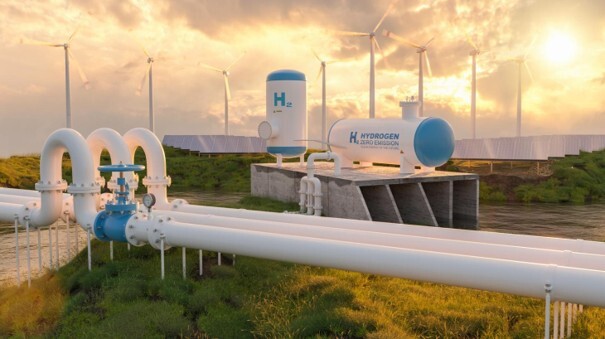
World Hydrogen 2026 made one thing clear: the hydrogen economy is no longer a future ambition. It is happening now, in plants, on project sites, and in the contracts being signed across Europe. Across the exhibition floor, conversations centred on new production facilities, infrastructure investments, and the technologies needed to support the next phase of growth. But one topic consistently cut through the noise: safety.
As hydrogen projects become larger and increasingly operational, the industry's focus is shifting beyond production targets. The real question is whether the systems required to ensure safe, reliable, and efficient operations are keeping pace.
From the Exhibition Floor to a Real Project
For Neohance, this is not just an observation, it is something we are actively delivering on.
We are proud to have been awarded the contract to supply a gas detection system for a major hydrogen production facility in the Netherlands. The project will feature more than 150 gas detection points, providing continuous monitoring for hydrogen leaks and other hazardous gases throughout the plant.
The system will support:
- Continuous gas monitoring
- Real-time hydrogen leak detection
- Alarm management
- Integration with the facility's safety infrastructure
- Enhanced protection for personnel, assets, and operations
Projects of this scale demonstrate how safety systems are becoming a fundamental part of hydrogen infrastructure from the earliest stages of development.
Why Hydrogen Detection Is a Different Challenge
Hydrogen presents unique safety challenges. It is colourless, odourless, approximately fourteen times lighter than air, has an extremely low ignition energy, and a wide flammable range of 4–75% by volume in air. It rises rapidly and accumulates at elevation, which means detection systems need to be positioned, calibrated, and integrated with precision.
Small leaks that would go unnoticed with a standard approach can pose serious risks in a hydrogen facility. This is why purpose-built detection technology matters.
The Technology Behind the Project
For this hydrogen production facility, Neohance supplied multiple Sensitron SMART 3G D2 gas detectors individually configured for hydrogen (H₂), carbon monoxide (CO), and methane (CH₄) detection across different areas of the facility.
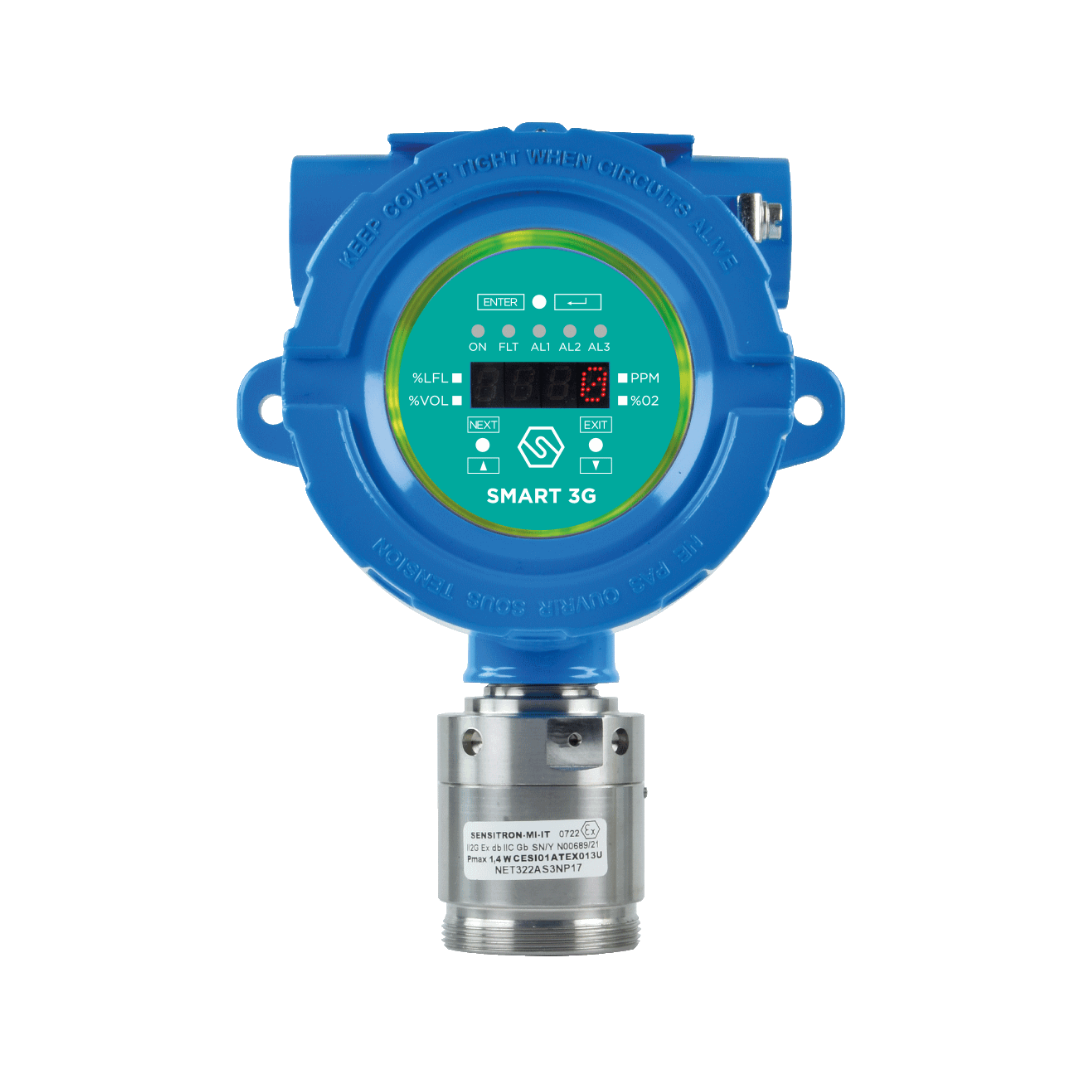
The SMART 3G D2 was selected for several reasons:
Dual sensing capability. The detector is available with both catalytic (%LEL) and electrochemical (ppm range) hydrogen sensors. This enables early leak detection at trace ppm levels alongside continuous monitoring of explosive concentrations, exactly what is required around electrolysers, compressor rooms, and storage areas.
SIL2 certified for functional safety. Large industrial hydrogen facilities require gas detection to integrate into Safety Instrumented Systems (SIS). The SMART 3G D2 carries SIL2 certification, making it suitable for safety-critical applications and giving project teams the confidence that the system meets rigorous functional safety requirements.
Certified for hazardous area operation. Given hydrogen's ignition characteristics, hazardous area certification is non-negotiable. The SMART 3G D2 is fully certified for operation in classified zones and designed to meet stringent industrial safety standards.
Straightforward integration. With 4–20 mA output, RS485 Modbus communication, relay outputs, and local display with LED status indication, the detector integrates directly into PLC, DCS, ESD, and SCADA systems, simplifying commissioning and reducing integration costs at scale.
Built for reliability and low maintenance. For a 150-point system, maintenance efficiency is critical. The SMART 3G D2 features continuous self-diagnostics, non-intrusive calibration, a local diagnostic display, and a modular sensor design, all of which reduce downtime and simplify periodic maintenance across the lifecycle of the facility.
A flexible platform for the future. Beyond hydrogen, industrial facilities require monitoring for oxygen, ammonia, carbon monoxide, NOx, and other process gases. The SMART 3G platform supports more than 50 gas types on the same detector architecture, simplifying spare parts management, training, and future system expansion as the facility evolves.
Safety as Infrastructure
One of the strongest messages from World Hydrogen 2026 was that the industry's future will be defined not just by innovation, but by successful implementation.
Scaling hydrogen production requires more than investment and electrolyser capacity. It requires the monitoring infrastructure, safety systems, and operational confidence to run these facilities reliably, every day, at scale.
This project is a strong example of how the industry is turning ambition into reality. And it reflects a broader shift: safety systems are no longer a late-stage consideration. They are being built into hydrogen infrastructure from day one.
At Neohance, we are proud to be part of that work, delivering gas detection and monitoring solutions that help the next generation of hydrogen facilities operate safely and confidently.
Because as hydrogen scales fast, safety must scale faster.
Want to follow our work in hydrogen safety, gas detection, and industrial monitoring?
Follow Neohance on LinkedIn for monthly updates or get in touch directly at projects@neohance.tech if you have a project we can support.