
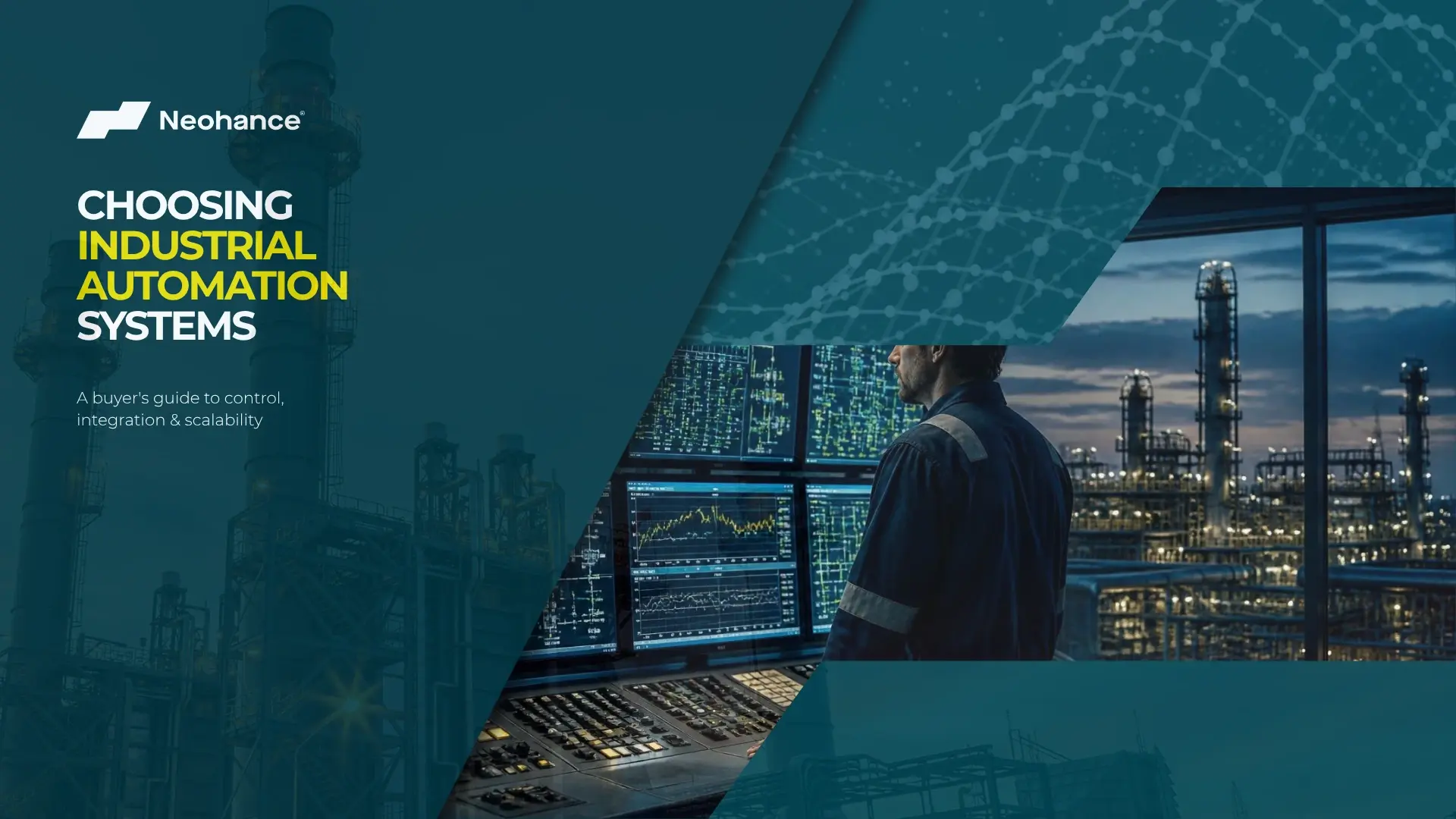
Industrial automation is no longer only about replacing manual work with machines. For many industrial companies, automation now plays a central role in productivity, process control, reliability, safety, and long-term scalability. That means choosing the right industrial automation systems is not simply a technical decision. The real question is whether that system can integrate with existing infrastructure, support increasingly complex industrial processes, scale with future requirements, and remain reliable throughout its lifecycle.
So what should you evaluate before making that investment?
Start with the process, not the technology
One of the most common mistakes in automation projects is starting with a preferred platform, supplier, or technology before fully understanding the process requirements.
A strong automation strategy starts with the operation itself.
Which processes need to be controlled? Where are the current bottlenecks? Which steps create the most variability, downtime, or manual intervention? What data is needed to make better operational decisions?
For companies working with complex industrial processes, this is especially important. The automation system should support the process rather than force the process to adapt around technical limitations.
By defining operational requirements first, engineering teams can make better decisions about system architecture, control strategy, and integration.
Evaluate the control capabilities
At the heart of most industrial control systems is the ability to monitor, regulate, and coordinate equipment reliably.
When evaluating a system, consider whether it supports the level of control your operation requires, including:
- real-time monitoring
- alarms and fault handling
- process sequencing
- data logging
- remote diagnostics
- redundancy
- integration with sensors and field devices
Some facilities may need a relatively straightforward setup, while others require more advanced automation control systems capable of coordinating multiple interconnected processes or distributed assets.
The right solution should provide the necessary level of control without creating unnecessary complexity.
Integration should be a core selection criterion
In most industrial environments, new automation does not start from a blank page.
New systems often need to connect with existing PLCs, SCADA platforms, field instrumentation, third-party equipment, legacy systems, or business software.
This makes integration one of the most important factors when selecting industrial automation systems.
Before implementation, evaluate compatibility with your existing infrastructure, supported communication protocols, legacy system integration, data exchange requirements, and the ability to connect future equipment.
Flexible architectures can make future expansion significantly easier and reduce unnecessary dependence on one technology ecosystem.
Plan for scalability from the beginning
Automation projects often start with one process, one production line, or one location.
Successful systems rarely stay small.
Can the system accommodate additional sensors, machines, control panels, locations, users, reporting functions, or analytics tools without requiring a complete redesign?
A scalable architecture protects the original investment and supports long-term process optimization as operational requirements evolve.
Planning a new automation project or modernizing an existing control system?
Neohance supports industrial companies with engineering, system integration, commissioning, calibration, and ongoing technical support. Our team can help assess your current infrastructure and identify an automation approach that fits your operational requirements and future plans.
Get in touch with our projects team at projects@neohance.com to discuss your automation requirements.
Consider the full lifecycle, not only the initial investment
The purchase price is only one part of the total cost of an automation system.
Engineering, commissioning, maintenance, software updates, spare parts, training, modifications, and technical support can all affect the total lifecycle cost.
Ask whether the system is easy to maintain, whether replacement components are readily available, and whether internal teams can make minor changes without always relying on specialist support.
A technically advanced solution can still become expensive and difficult to operate if every adjustment requires external support.
Prioritize reliability and maintainability
Automation should reduce operational risk, not create new points of failure.
For critical industrial processes, reliability should therefore be a major selection criterion.
Good industrial control systems should make faults easier to identify and resolve through clear alarms, structured software, proper documentation, and accessible diagnostics.
In environments where downtime is costly, maintainability can be just as important as performance.
Include cybersecurity in the design phase
As industrial environments become more connected, cybersecurity has become an essential part of automation design.
Modern manufacturing automation often involves remote access, connected devices, cloud platforms, and integration with corporate IT systems.
Appropriate access control, secure remote connections, software updates, backups, and network segmentation should be considered from the beginning, not added later.
Evaluate the people behind the technology
Technology is only one part of a successful automation project.
For complex industrial processes, the experience of the engineering partner matters just as much.
A strong partner should understand both the control technology and the industrial environment in which it will operate.
When evaluating a supplier or integrator, consider their experience, commissioning capabilities, documentation standards, maintenance support, and ability to provide long-term technical assistance.
The goal should not simply be to install a system, but to create a solution that can continue to support the operation as requirements evolve.
Avoid unnecessary complexity
More functionality does not always mean a better system.
Industrial automation projects can easily become overengineered when too many technologies, interfaces, or features are introduced.
A better approach is to design around real operational needs while leaving enough flexibility for future expansion.
The most effective industrial automation systems often balance performance, reliability, simplicity, and scalability.
A practical selection checklist
Before selecting an automation solution, engineering and operations teams should be able to answer a few key questions:
Does the system support the required process and control strategy? Can it integrate with existing infrastructure? Is it scalable and maintainable? Are lifecycle costs acceptable? Are cybersecurity requirements addressed? And can the engineering partner provide long-term support?
Clear answers to these questions significantly reduce the risk of choosing the wrong solution.
FAQs
1. What should companies consider when choosing an industrial automation system?
Companies should evaluate process requirements, integration with existing infrastructure, scalability, reliability, cybersecurity, and long-term maintenance costs. The right system should support both current operations and future growth.
2. What is the difference between PLC and SCADA systems?
A PLC (Programmable Logic Controller) controls equipment and industrial processes, while SCADA (Supervisory Control and Data Acquisition) provides centralized monitoring, visualization, and supervisory control. Both technologies often work together within industrial automation systems.
3. Can new automation systems integrate with existing industrial equipment?
Yes. Modern automation systems can often integrate with existing PLCs, sensors, field devices, and legacy infrastructure. Compatibility depends on communication protocols, system architecture, and equipment capabilities.
4. When should an industrial automation system be upgraded?
An upgrade may be necessary when existing systems experience frequent downtime, limited scalability, outdated components, security vulnerabilities, or difficulties integrating new equipment. Modernization does not always require complete system replacement.
Final thoughts
Choosing the right industrial automation systems is not simply a technology decision. It is a long-term operational decision that can influence productivity, reliability, scalability, maintenance, and overall process performance.
For organizations managing complex industrial processes, the strongest automation strategies combine robust control, flexible integration, scalable architecture, and practical lifecycle support.
The right system should not only solve today’s challenges. It should also create a stronger foundation for future growth and continuous process optimization.
Need support selecting or implementing the right industrial automation system?
Neohance helps industrial and energy companies design, integrate, commission, and maintain automation solutions for complex processes. From control system engineering to field support, we work with existing infrastructure and operational requirements to deliver practical, scalable, and reliable solutions.
Get in touch with Neohance to discuss your automation requirements or upcoming project at projects@neohance.tech